
Fair ways to plan family Christmas gifts without overspending

Fair doesn’t have to mean spending the same amount on everyone. A fair way to do family Christmas gifts is to agree on an approach that suits your family, budget and the people you’re celebrating.
Gift-giving can feel uneven when one person organises the lists, tracks who’s included and tries to make every present thoughtful. A simple shared plan can ease the pressure without taking the joy out of Christmas.
This article shares practical ways to make family gift-giving feel fair, from choosing shared activities and asking for thoughtful wish lists to organising group gifts, reusing suitable presents and planning around sales. You’ll find ideas for setting expectations together, keeping spending in check and making room for different ages, interests and budgets. The aim isn’t to make every gift identical. It’s to help everyone feel considered, while keeping the planning manageable for the person bringing it all together.
Table of Contents
1. Shared activities as an alternative to exchanging presents
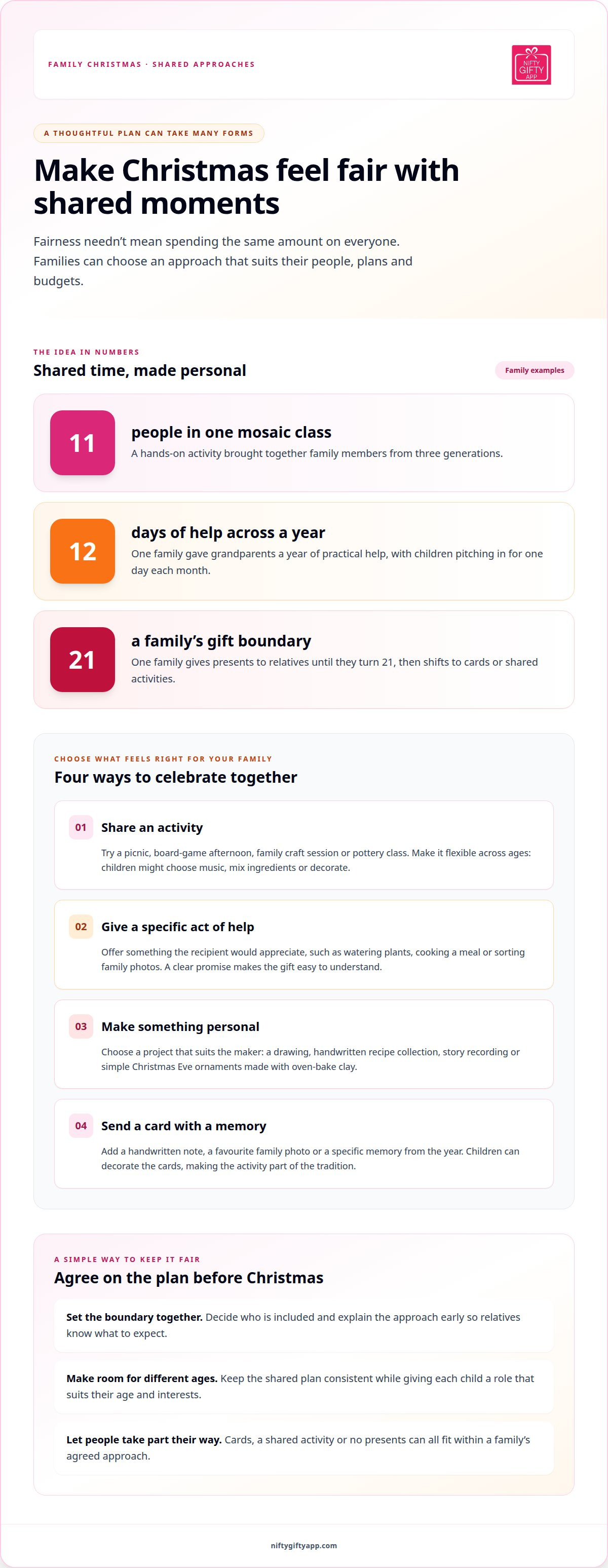
Swap individual presents for time together, and the family gets a shared memory instead of another pile of wrapping. Choose an activity that works across ages, such as a picnic, a board-game afternoon or a family craft session. A pottery class gives everyone something to make and take home. One family mosaic class brought together 11 people from three generations, showing how hands-on activities can include different ages and interests.
For children of different ages, make the activity flexible rather than identical. Give each child a role suited to their age and interests, such as choosing music, mixing ingredients or decorating. Keep the overall plan consistent while letting each child participate in a manageable way. A young child might colour paper decorations while older children take on more detailed craft steps.
Acts of service can become presents too. One family gave grandparents 12 days of help across a year, with the children pitching in for one day each month. Offer a specific task the recipient would appreciate, such as watering plants, cooking a meal or helping sort family photos. A clear promise is easier to enjoy than a vague offer to help sometime.
Homemade gifts can feel personal without elaborate supplies. A child might make a Nativity set from wooden blocks for a grandparent, or an older sibling could record stories for a younger one. Choose a small project that suits the maker’s skills, such as a drawing, handwritten recipe collection or simple Christmas Eve ornaments made with oven-bake clay.
When the family agrees to skip presents, cards can carry the Christmas message. Add a handwritten note, a favourite family photo or a specific memory from the year. Children can decorate the cards, making the activity part of the tradition. For relatives who live far away, a card offers a personal greeting without the need to choose, buy or post a separate gift.
Some families make the rule simpler by buying presents only for children. One family gives to relatives until they turn 21, then shifts to cards or shared activities. Agree on the boundary together and explain it before Christmas, so adults know what to expect. Whether the family chooses service, handmade keepsakes, cards or an outing, fairness comes from a clear plan that includes everyone. Concert tickets, a cooking class or a weekend getaway can also become a shared Christmas experience, rather than separate presents.
2. Keeping a list of children's gift ideas
A shared wish list gives relatives a helpful starting point when choosing Christmas gifts. Ask children what they enjoy now, then add a mix of practical and playful ideas. A child who loves drawing might list coloured pencils, a sketchbook and a craft activity. Update the list as interests change, so it reflects what they would enjoy now rather than a past favourite.
Make lists useful by including clear options within the agreed budget. Each adult could provide a few gift ideas, and children’s lists can follow the same approach. Name the item or activity, add useful details such as a favourite colour, and mark priority ideas. This gives relatives a choice while keeping expectations aligned.
If a child finds it hard to name a present, ask about activities they enjoy, characters they follow or things they use every day. A board game can suit their age or interests, while a book may feel more personal with a note explaining why it was chosen. For example, you could ask: What do you like doing after school? This often gets a clearer answer than asking what they want.
Lists can also guide family gifts that suit several people. Build a basket around one adult’s interests, such as spa products for someone who enjoys a quiet evening or gourmet snacks for a keen cook. Wine may suit an adult who enjoys it; choose a non-alcoholic treat for relatives who don’t. A shared theme makes a small collection feel thoughtful rather than like a mix of unrelated items.
Agree on the spending limit before anyone starts choosing. Decide whether it applies per person, per child or to the whole family exchange, then keep suggestions within it. This makes the list easier to use and helps relatives avoid feeling they need to match a more expensive present. State the rules and limit upfront so everyone can take part on equal terms.
For relatives overseas or unable to attend, share the same list with everyone and agree how their gifts will be included. They can choose from the children’s ideas, send a card or join a video call during the celebration. Keep the list and claimed ideas in one shared place, so relatives can see what others have chosen and the organiser can track what’s covered.
3. Organising a family gift exchange
A family gift exchange can keep the focus on one thoughtful present rather than buying for every relative. Before agreeing, decide who’s taking part, whether children are included and what kind of gift is suitable. A clear plan helps avoid mismatched expectations, especially when adults, teenagers and younger children gather. Keep the arrangement optional, too. Relatives who prefer cards, shared activities or no gifts can still join the celebration.
Set the spending limit together, then make sure everyone knows what it covers. Decide whether it applies to one present, a shared family contribution or another arrangement. A family might divide its gift budget between an exchange present and a donation to a cause it supports. This leaves room for a creative gesture while directing part of the planned spending towards something meaningful.
Agree on simple gift guidelines before anyone starts choosing. A theme such as something useful, handmade or connected to a favourite pastime can help people make personal choices. A keen gardener might appreciate seed packets and a handwritten planting note, while a board-game fan could enjoy a game suited to their interests. Keep the theme broad enough for different ages, tastes and abilities.
Some families add a swapping game after presents are opened. In one family’s version, an opened gift can change hands up to three times. If you choose this format, explain how turns work and whether participants can pass. Keep the game light-hearted, not competitive. A small, clearly understood set of rules lets everyone enjoy the activity without the organiser having to settle arguments mid-celebration.
Think through practical details, too. If relatives live overseas or can’t attend, decide whether they’ll send a gift, join remotely or sit out that year. Share the plan early and give everyone the same information about the limit, theme and timing. For families spread across different places, a group message keeps arrangements visible without relying on one person to repeat them individually.
Keep the exchange proportionate to your family’s needs. If a gift game adds pressure, simplify it: agree on one present, make cards part of the tradition or choose a shared activity instead. The fairest approach is one everyone understands and can comfortably join. A short agreement about participants, spending and rules can make the exchange a straightforward part of Christmas, not another task for the organiser.
4. Low-cost and reused gifts
A thoughtful Christmas gift doesn’t need to be new or expensive. Start with something at home that’s clean, in good condition and suited to the recipient. A child might pass on a book they’ve outgrown or choose an unused craft set for a cousin who enjoys making things. Check that every piece is present and usable, then add a short note explaining why you thought they’d like it.
Reused gifts work best when the recipient’s interests lead the choice. One child gathered unused or gently used items from home to give Christmas presents to all 21 children in her class. For a family exchange, set a simple rule: gifts must be clean, complete and something the recipient can genuinely enjoy. That keeps reuse thoughtful, not a way to offload unwanted things.
Handmade presents can be personal and practical. Try homemade biscuits, a small batch of infused cooking oil or a hand-sewn tote bag using supplies already in the cupboard. A family hamper can bring together affordable favourites, too.
A clear spending cap helps everyone plan for the same scale of gift. Choose a useful small item, a favourite snack or a handmade voucher for a specific task, such as cooking dinner. Keep the offer realistic and write down what it covers, so the recipient knows what to expect.
A family total can help when several children are included. The useful idea is to set the overall amount first, then divide it fairly across the children or agree on a shared gift. Matching gifts can also make the allocation straightforward. A 12-year-old gave his younger brothers matching rubber mallets, showing that a simple, practical present can suit siblings without needing identical interests.
To make a fair plan, agree whether reused and handmade gifts count towards the same limit as new presents. A shared rule avoids one relative spending more while another contributes time and effort. Write the decision in the family message, include who’s taking part and keep choices appropriate for each recipient. The right fit matters more than the label on the wrapping.
5. Planning ahead and shopping sales
A fair way to do family Christmas gifts starts with one shared list before anyone begins shopping. Add each recipient, suitable ideas, the agreed spending limit and whether a present has been purchased. Note where each item is stored, too. This gives the organiser a clear view of what’s still needed and helps prevent buying a second version of something already tucked away.
Plan hampers early, too. One person buys four to five gift bags a few months before Christmas to make hampers. Choose a theme for each recipient, such as breakfast treats, gardening bits or a movie-night collection. Keep each bag’s contents beside the recipient’s name, so every hamper feels intentional and stays within the family’s agreed limit.
Before shopping a sale, write down the item you need and the maximum you’ve agreed to spend. A marked-down price can still stretch the family budget if the item wasn’t planned. Compare the sale price with the amount set aside, then decide whether it suits the recipient. If it doesn’t fit the list, leave it and return to your planned ideas.
Keep the family’s rules in view while looking for discounts. If everyone agreed on one present per person, a special offer on a bundle doesn’t make every extra item a useful gift. Check what the package contains and whether the recipient would enjoy each part. A suitable sale item may leave room for a handmade card or shared treat without raising anyone’s spending limit.
For relatives in different parts of Australia or overseas, coordinate choices before anyone buys a present. A shared list can show which ideas are already taken and who’s covering each recipient. Ask everyone to update it after purchasing, with the item and recipient, so the organiser can see what’s covered.
Set aside a regular moment to review the list, such as after a shopping trip. Mark completed gifts, check the remaining budget and store receipts with the relevant item. If a sale item is unavailable, return to the original ideas rather than choosing something unrelated under pressure. A brief review keeps the plan grounded in what each person wants and what the family agreed to spend.
Choosing a fair way to do family Christmas gifts doesn’t mean buying every present months in advance. It means deciding who’s included, what suits them and how much the family plans to spend. Use sales to support those decisions, not make them. Keep the list current as gifts are purchased, and the organiser can see what remains while keeping the focus on a thoughtful family celebration.
Nifty Gifty App
Nifty Gifty App helps family organisers manage gift lists and group contributions in one place. Once your family has agreed on its Christmas approach, use the app to coordinate who’s giving what.
Organisers use the mobile app to organise gifts. Guests can claim gifts through a secure link or QR code, without downloading an app or creating an account. Claims update in real time, helping the family see which gifts are already covered. For a shared present, contributors can chip in while the app tracks a live running total. Payments are arranged separately.
That keeps the practical details together while your family chooses gifts, sets its budget and enjoys the celebration. Organise your family’s Christmas gift list with Nifty Gifty App.
Make your family’s plan the starting point
A fair way to do family Christmas gifts doesn’t need to look identical in every household. What matters is agreeing on a comfortable plan, then giving everyone room to make it personal. Before the next festive season, choose one family organiser to gather preferences and share the agreed approach. This gives relatives a clear place to start, especially when plans span multiple households.
Keep the conversation open as family circumstances change. A new baby, a move or a tighter household budget can shift what feels manageable. Adjust the plan together rather than letting old expectations decide for you. Christmas gifting should leave room for connection, not leave the organiser guessing what everyone can manage.
If you’d like a practical place to coordinate family gifting for the next occasion, contact Nifty Gifty App. Start with the approach that suits your family, and make room for a celebration that feels thoughtful and joyful.
Frequently Asked Questions
What are fair ways to organise Christmas gifts in a large family?
In a large family, agree on an organising rule that works across households, then appoint a contact person for each branch. That person can pass on updates and flag changes, such as a new partner joining the celebration. Keep a simple record of who’s included and who has opted out. A consistent approach helps prevent relatives from being missed or given different expectations.
How does a one-present family gift exchange work, and what rules should we set?
A one-present exchange usually means each participant brings a gift for another person, with the family agreeing on the format beforehand. Set out who can join, the spending limit, whether gifts should follow a theme and how the exchange will work. If the group plans a swapping game, explain how turns work and whether gifts can change hands. Keep the rules clear and participation voluntary.
What is a reasonable Christmas gift spending limit per person in Australia?
There isn’t one spending limit that suits every Australian family. A workable cap depends on who’s included, each household’s available budget and whether the limit covers each recipient or the whole exchange. Choose an amount participants can manage without borrowing or feeling obliged to match someone else. State the limit as a maximum, not a target everyone must spend.
How can families agree on a fair gift budget without causing conflict?
Discuss the budget before anyone starts shopping, and focus on what the group can comfortably manage rather than past spending. Let each household suggest a limit, then agree on a maximum that doesn’t pressure anyone to stretch further. Allow people to opt out or take part differently without explaining private finances. A brief written agreement can prevent misunderstandings later.
Are gifts expected for every family member, or can adults exchange gifts only?
There’s no universal rule that every relative must receive a present. A family can choose an adults-only exchange, include children or make a different arrangement for each household. Decide together and tell relatives early, particularly if partners or blended families are joining the celebration. Clear expectations help avoid an awkward moment on Christmas Day when some people arrive with gifts and others don’t.
What are alternatives to buying individual Christmas gifts, such as shared experiences or donations?
Families can replace individual presents with a shared meal, a contribution to a chosen cause or a collection of family recipes. For example, relatives could each add a favourite dish and its story to a family cookbook. If choosing a donation, agree together on the cause and how each person will contribute. This keeps the gesture shared and personal without requiring everyone to choose a separate present.
How can families handle unequal incomes when setting Christmas gift expectations?
Set a shared maximum that suits the least flexible household, and don’t treat equal spending as a measure of equal care. Relatives can take part with a handwritten note, a practical offer of help or a contribution to a shared meal. Keep spending private, and don’t ask anyone to explain their circumstances. A clear opt-out lets people join family celebrations without financial pressure.



Comments