
How to Avoid Overspending on Christmas Without Losing the Cheer

A cheerful Christmas doesn’t need to end with an expensive bill. To learn how to avoid overspending on Christmas, set a total budget and divide it between meals, gifts and events. Keep some money aside for last-minute costs, and decide how you’ll manage credit card spending before the celebrations begin.
Little extras can add up quickly: another plate at lunch, a last-minute present, one more outing. Planning doesn’t mean cutting out the good bits. It means choosing what matters before costs start competing for your attention.
This guide covers how to plan festive meals, set limits for gifts and events, and leave room for unexpected expenses. You’ll also find practical ways to keep Christmas credit card spending in check, so the season can feel generous and joyful without stretching your budget further than you intended.
Table of Contents
1. Budget and plan Christmas meals to reduce food waste
A few years ago, more than half of people who drew up a Christmas budget still overspent. Start with money you can actually set aside, not a hoped-for figure. Check regular bills, planned expenses and available savings first. What remains after those commitments gives you a practical Christmas limit for food, gifts and events. Knowing how to avoid overspending on Christmas starts with a budget based on that available amount.
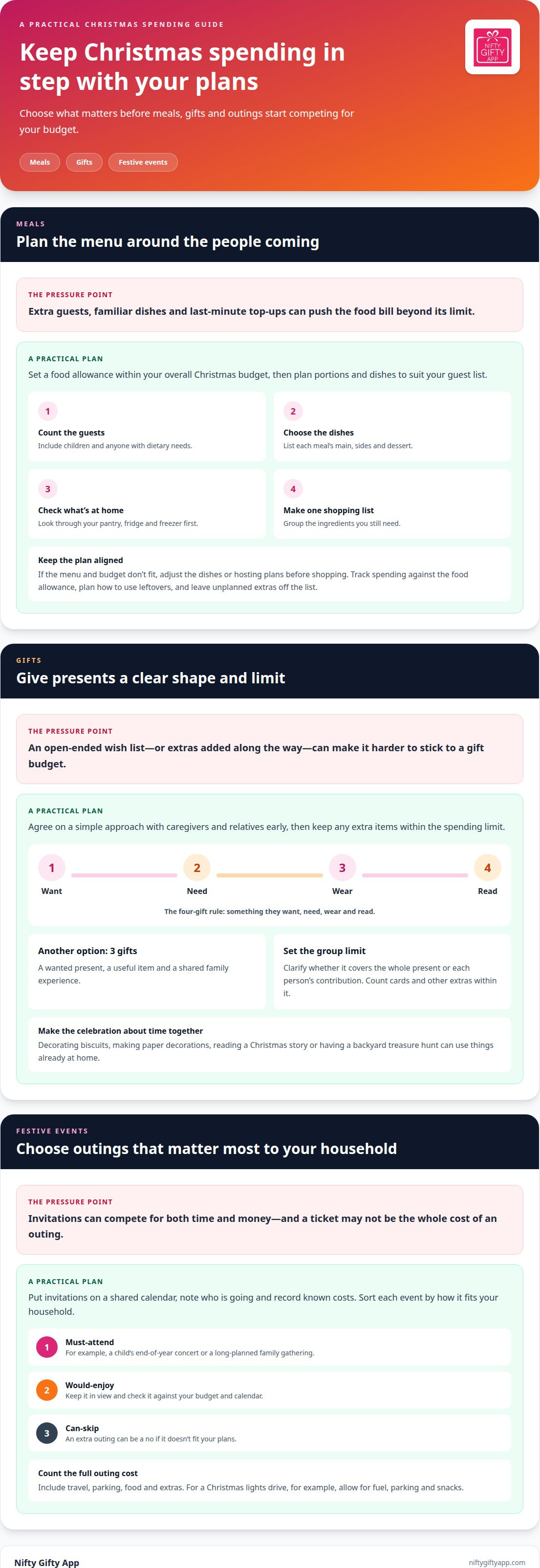
Next, decide what Christmas means for your household. List the meals you’ll host, who’s coming and the dishes you genuinely want to serve. Set a food allowance within your overall Christmas budget, then reserve money for gifts and other plans. If the totals don’t fit, adjust the menu or hosting plans before you shop. For a shared lunch, ask guests to bring a specific dish to avoid preparing duplicates.
To plan meals and keep spending and food waste in check, write down:
Who’s coming, including children and anyone with dietary needs.
The dishes for each meal, such as a main, sides and dessert.
Ingredients already in your pantry, fridge or freezer.
The ingredients still needed, grouped into one shopping list.
Use your guest list to plan portions. If a smaller group is coming, choose a menu that suits them instead of making every dish you remember from past Christmases. Plan how you’ll use leftovers: roast vegetables can go into lunch the next day, while extra bread can be frozen. Buy fresh food closer to when you’ll use it, and leave unplanned extras off the list. A meal budget is a practical part of how to avoid overspending on Christmas, giving each grocery decision a clear limit.
To save throughout the year, set aside a manageable amount from your regular pay and keep it separate from everyday spending. Review the amount as your circumstances change, then use your savings to shape your Christmas budget instead of relying on credit for the meal.
Track each purchase against your food allowance as you shop. Keep receipts or record spending in a notes app, then update the remaining amount before adding anything else to your trolley. If the total is getting tight, swap an extra item for something you already have at home. This keeps your menu, shopping list and available budget aligned, rather than letting a last-minute top-up push the meal over budget.
Americans planned to spend an average of more than $1,000 on gifts during the holiday season, so keep meal funds distinct.
2. Use simple activities and a four-gift rule for children
Children can enjoy Christmas without a growing pile of presents. One approach is the four-gift rule: something they want, need, wear and read. It gives adults four clear categories to work with instead of an open-ended list. Agree on the approach with other caregivers early, especially if grandparents or relatives in other cities are also planning gifts.
Some families choose a smaller alternative: three gifts at Christmas, such as one wanted present, one useful item and a shared family experience. Keep the plan simple and make sure everyone involved understands it. For example, a board game for the household can count as the shared experience, followed by an afternoon playing together.
Agree on a spending limit before organising a family or group gift exchange. Share the limit clearly, and decide whether it covers the whole present or each person’s contribution. If someone suggests adding a card, chocolates or another extra, count those within the agreed limit rather than treating them as separate. Clear boundaries help everyone take part without feeling pressured to match a more expensive gift.
Simple activities can bring the fun without adding another present to the list. Try decorating biscuits, making paper decorations, reading a Christmas story or setting up a backyard treasure hunt. Choose something that uses items you already have at home, and let children help prepare it. A shared activity also gives relatives visiting from interstate or overseas an easy way to join in.
To find affordable Christmas gifts in Australia, start with the recipient’s interests and set a spending limit before choosing. Homemade treats, a handwritten voucher for a shared activity or a favourite book can feel thoughtful without relying on an expensive present.
Set expectations with children before gift day. Explain how many presents they’ll receive and what the family will do together, such as a beach visit or board-game afternoon. For extended family, suggest exchanging gifts in January if December spending or travel makes the timing difficult. A later exchange can still feel special and avoid adding pressure to an already busy day.
Keep comparisons out of the conversation. A child may notice a cousin’s larger present, but adults can focus on the agreed family plan, the activity and the thought behind each gift. If relatives have different budgets, share the same limit privately and consistently. The goal is a warm celebration, not a contest over who gives the biggest present.
3. Choose festive events selectively
December invitations can stack up quickly: school concerts, neighbourhood parties, work functions and family outings all compete for time and money. Choose the events your household genuinely values, then decide how much of your Christmas budget can go towards outings. A ticket is only part of an event’s cost; travel, parking, food and extras can add to the total.
Start with a shared calendar. Add each invitation, note who plans to attend and mark any known costs. Then sort events into three groups: must-attend, would-enjoy and can-skip. A child’s end-of-year concert or a long-planned family gathering might take priority. An extra outing can be a no if it doesn’t fit your budget or calendar.
Before accepting an invitation, estimate the full cost of the outing. For a Christmas lights drive, include fuel, parking and snacks. For a festive market, agree on a spending limit before arriving and bring food from home. For a ticketed show, factor transport and refreshments into your decision, not just the entry price. This makes activities easier to compare fairly.
Keep some festive traditions simple. A walk through decorated streets, a picnic at a local park or a Christmas movie at home can bring everyone together without a ticketed event. Check what your local library, council or community group has organised, and review the details before adding an activity to your plans. The right choice depends on location, access and what your family enjoys.
Try these steps when several events fall in the same week:
Pick the event each household member most wants to attend.
Choose a spending limit for optional outings before invitations arrive.
Combine plans where practical, such as visiting relatives before a nearby light display.
Say no promptly when an event doesn’t suit your budget or schedule.
A clear, friendly reply helps keep expectations comfortable. You could say, “We’re keeping December plans light, but we hope you have a lovely night.” If the event matters to you, suggest a lower-cost alternative, such as hosting afternoon tea at home instead of meeting at a restaurant. That keeps the connection without committing to an outing that strains your spending plan.
Record event costs as they happen. A note on your phone can track tickets, transport and refreshments against your outing allowance. If an event costs more than expected, adjust a later optional plan instead of quietly adding the difference to a credit card. Selective plans leave more room for the celebrations your family will remember.
4. Keeping contingency money for last-minute expenses
A Christmas budget can cover planned meals and gifts yet still miss small costs that appear late: forgotten batteries, extra ice, a replacement serving dish or petrol for an unplanned visit. Set aside a separate contingency amount before dividing the rest of your available Christmas money. Choose an amount based on what your household can spare and the last-minute costs you expect.
Keep this reserve separate from everyday spending so it doesn’t quietly disappear into routine purchases. A separate savings account or labelled cash envelope can make the boundary visible. Record the starting balance in your budget, then note each use. If you spend some on extra groceries, you’ll know what remains for another genuine Christmas expense.
Picture the familiar 9 p.m. Christmas Eve dash for a missing ingredient. A short check of your plans earlier can prevent that particular rush, but a reserve gives you options if something still comes up. Before paying, ask whether the item is essential for the celebration, already covered elsewhere, or easily replaced with something at home. For example, swap a missing garnish for pantry herbs instead of making a separate trip.
Keep expected costs separate from surprises. If you know you’ll need extra transport to collect relatives, include it in your plan instead of treating it as an emergency. Save contingency money for costs you couldn’t reasonably include earlier, such as a broken item or an unexpected guest. This distinction helps protect the reserve for its intended purpose.
Use a simple record to make each decision visible:
Write down the reserve amount before Christmas spending begins.
Note each expense, such as extra food or a replacement item.
Check the remaining balance before using it again.
If the reserve runs low, adjust an optional purchase or plan instead of quietly adding more spending.
Set a clear limit for the reserve, and don’t treat unused money as permission for an extra splurge. If Christmas passes without an unexpected expense, leave the remainder in savings or put it towards another upcoming household cost. If a genuine expense uses the full amount, pause and review your remaining plans before spending elsewhere. A quick family conversation can help everyone agree which extras matter and which can wait.
If your family is hosting guests or travelling between cities, consider likely pressure points before the holiday begins. A longer drive may mean unplanned fuel or a meal stop; a visiting relative may need an extra place setting. Thinking through these possibilities helps you choose a sensible reserve and set a clear boundary for last-minute decisions.
5. Limit credit card use and repay balances in full
A credit card can make Christmas spending feel distant from your day-to-day budget, but the balance still needs to be repaid. Before using a card for gifts, groceries or travel, decide what you can afford from your available money. Treat that amount as your limit, not the card’s available credit.
Use cash or a debit card where practical. Paying from money you’ve already set aside makes each purchase easier to track. If you use a credit card for an online order or essential booking, record the amount straight away. Add it to your Christmas spending total, even if the card payment won’t leave your account until later.
Plan how you’ll clear the balance before making a purchase. The guidance for this article is to repay credit card balances in full before interest builds up. Check your card statement and payment date, then set a reminder to review the balance and make the payment. Don’t treat a purchase as affordable just because the minimum repayment looks manageable.
Buy now, pay later can also make spending feel less immediate. Treat these services like credit cards and use them only when you can clear the balance. For example, if a present would exceed your available Christmas money when bought outright, splitting the cost into future payments doesn’t make it fit the budget. Include scheduled repayments alongside your other planned expenses.
Keep credit use visible with a simple record. Note the purchase, amount and payment method in your budget. Review your card balance alongside spending on meals, gifts and events, so card purchases don’t sit outside your overall total. If planned spending is nearing its limit, pause optional purchases and choose a lower-cost alternative.
Before using credit, ask yourself:
Is this purchase already included in my Christmas budget?
Can I repay the full card balance by the payment date?
Have I counted any buy now, pay later repayments already due?
Could cash, debit or a less expensive choice work instead?
For a shared family purchase, agree on the amount and each person’s contribution before putting it on a card. For example, relatives planning a group gift can settle who will contribute and when, rather than leaving one organiser with the whole balance. Keep the payment arrangement separate from the gift budget, and record what has been paid back.
After Christmas, compare your statements with your notes. Check that every card purchase appears in your spending record, then plan to repay the full balance. A clear total and payment date help keep festive spending from carrying into the new year.
Nifty Gifty App
Nifty Gifty App helps keep family gift lists organised when you’re coordinating Christmas across households or cities. Organisers use the mobile app to create lists and share them with guests. Guests can claim gifts through a secure link or QR code, without downloading an app or creating an account. Claims update in real time, helping the group see what’s already covered.
Planning a joint present? Contributors can add their contributions, while the app tracks them with a live running total. Payments are arranged separately: the app doesn’t collect or process them. This can make gift coordination easier to manage alongside the spending limits your family has agreed.
If a shared gift list would help with your Christmas organising, visit niftygiftyapp.com to explore Nifty Gifty App.
Make room for the Christmas you want
A practical way to think about how to avoid overspending on Christmas is to decide how you want the day to feel before making more plans. Choose the moments you’ll look forward to, and let those priorities guide what you say yes to. Your celebration doesn’t need to look like anyone else’s to feel special.
Make your next step a conversation with the people sharing the day. Ask what matters to them, talk through expectations and agree on a plan everyone feels comfortable with. A thoughtful chat can ease the pressure on the person who usually handles the organising.
If you’d like to explore Nifty Gifty App, visit the website. Then turn your attention to the people, traditions and small moments that make Christmas yours. You can make room for a joyful celebration while keeping your choices grounded in what matters to your household.
Frequently Asked Questions
How to set a realistic Christmas budget in Australia?
Set your total Christmas limit using the money left after regular bills, groceries, transport and scheduled repayments. Split it into separate amounts for gifts, food, travel and activities, then check each purchase against the right category. For example, don’t let a cheaper gift justify adding another present if your gift limit is already reached. Nifty Gifty App can help track gift spending for an occasion, while household costs need their own budget.
How to save money on Christmas food and groceries in Australia?
Plan meals before shopping, check your pantry and freezer, then write one list for the dishes you’ll actually serve. If guests offer to bring something, ask for a specific item to avoid duplicate desserts and extra platters. Compare unit prices for similar products, choose seasonal produce and swap costly ingredients for options that work across several meals. Plan for leftovers, so food you’ve bought doesn’t go to waste.
How to avoid buy now pay later debt and credit card overspending at Christmas?
Before using a credit card or buy now, pay later service, decide what you can repay from your available Christmas budget. Keep a running total of purchases and note each repayment date beside the amount, so small instalments don’t disappear from view. If a purchase would take you over budget, choose a lower-cost option or leave it. A payment method changes when you pay, not what the item costs.
How to budget for Christmas travel and holiday costs in Australia?
Estimate the full cost of a trip before confirming plans, not just the fare or accommodation. Include local transport, fuel, parking, meals, activities, pet care and costs for leaving your home unattended. Set a separate daily spending limit for your time away, and agree in advance which shared costs family members will cover. If your dates are flexible, compare the total cost of different travel days and stay lengths before booking.



Comments