
How to Choose Thoughtful Gifts for Someone

A thoughtful gift isn’t about spending more. Learning how to give more thoughtful gifts starts with noticing what someone enjoys, needs or has happening in their life. Even a small, practical present can feel personal when it suits the person receiving it.
Choosing for someone you don’t know well can feel like guesswork. You want to be considerate, not give them something they’ll politely thank you for and quietly leave in a drawer.
Make the choice easier by looking for clues in their interests, recent changes and everyday routines. Then consider whether they prefer practical, sentimental, consumable or experience-based gifts. These ideas can also help when you’re organising a group present or buying for someone you’ve only just met.
Table of Contents
1. How do you choose the right gift for someone?
Start with the recipient, not the price tag. Think about what they enjoy, need, have mentioned or would rather not store at home. A useful tool for someone taking up a hobby can feel more thoughtful than an expensive novelty that doesn’t suit them. Aim for a gift that fits your relationship and their preferences, not one that creates pressure to reciprocate.
Set a spending limit that feels comfortable, then choose within it. A birthday present doesn’t need to match the value of a gift you received, and you don’t have to spend your full budget if a suitable option costs less. Reciprocity is about care, not keeping an exact tally. For a family present, agree on a contribution everyone can manage before choosing the item.
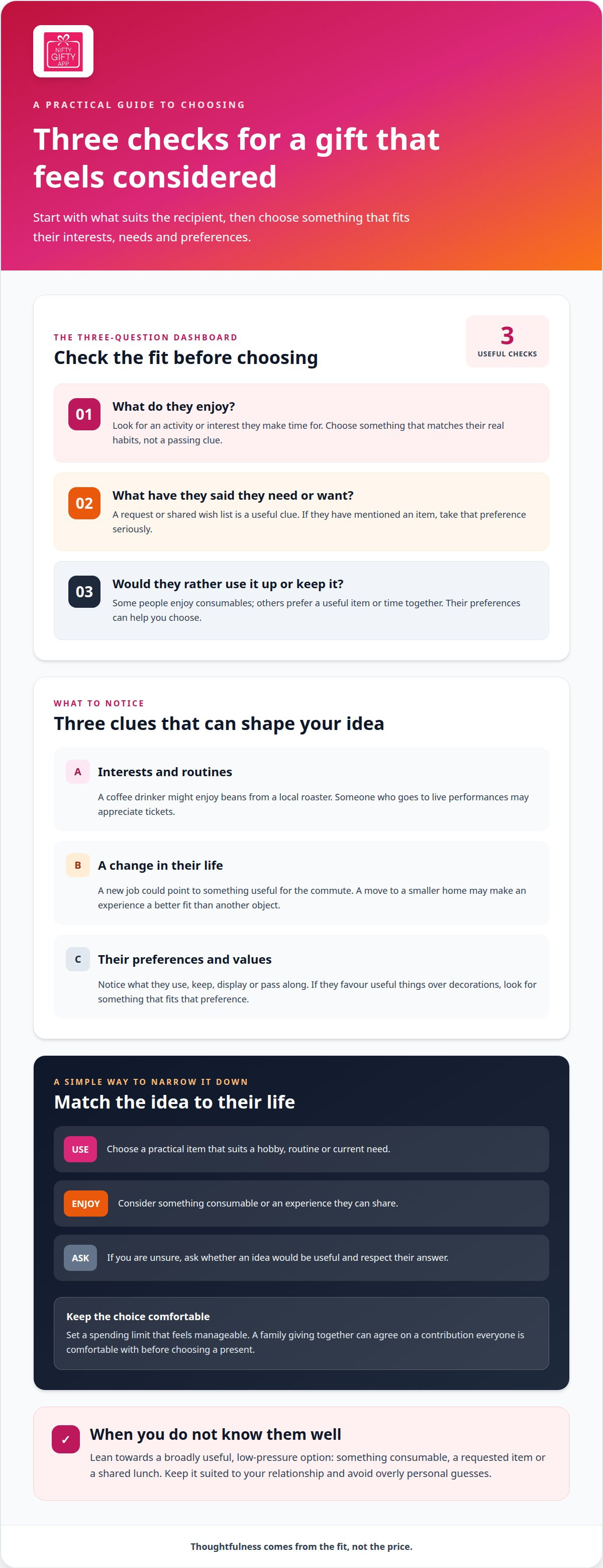
Ask yourself three practical questions: What do they enjoy doing? What have they mentioned needing or wishing they had? Would they prefer something to use up or keep? A coffee lover might enjoy beans from a local roaster, while someone who dislikes extra possessions may prefer a meal together. If they’ve requested an item or shared a wish list, take that clue seriously instead of replacing it with a surprise they may not use.
For someone who says they don’t want anything, choose a low-pressure option connected to what they already enjoy. A favourite snack, something they regularly use or an invitation to share lunch can feel considerate without adding clutter. If they’ve enjoyed a particular gift before, repeating it is sensible. Novelty isn’t necessary for someone to feel remembered.
Support a goal or hobby by matching the gift to their current stage. Someone learning to cook may appreciate an ingredient they’re curious about, while a new gardener might use a small item suited to the plants they grow. Avoid buying specialist equipment before you know what they need. If you’re unsure, ask about their latest project rather than quizzing them about gift preferences.
In Australia, a considerate approach is to follow the occasion, the relationship and any preferences the recipient has shared. Give a birthday gift that suits your connection, and don’t treat the recipient’s present as a bill they must repay. For a workmate or a new acquaintance, a modest, broadly useful gesture is usually less personal than a handmade keepsake.
To avoid unwanted clutter, skip generic decorations and clothes in uncertain sizes. Choose a useful item, something consumable or a requested gift instead. Give it for the birthday or occasion, or offer a small unexpected gesture when appropriate. You can ask, “Would this be useful?” before buying, then accept “no thanks” without asking them to justify it.
2. Choosing gifts around a recipient’s interests and life transitions
A meaningful gift reflects what someone values and how they spend their days. Learning how to give more thoughtful gifts starts with noticing details they share. A friend who talks about live theatre may enjoy tickets, while a keen runner might appreciate something that supports their training. Match the idea to their actual habits, not an interest you’ve inferred from one passing comment.
Start with a simple check: what do they do in their spare time, talk about often or make room for at home? A music fan who attends gigs may value an album from a favourite artist; another may prefer listening without collecting records. The same interest can suggest different gifts, so their lifestyle matters as much as the hobby.
Life changes can offer useful clues, too. A friend starting a new job might appreciate something practical for their commute, while someone moving into a smaller home may prefer an experience to another object. For someone welcoming a pet, consider a gift that suits both the animal and the owner’s routine. A major change isn’t a reason to choose something intimate or demanding.
Values can guide your choice without turning it into a grand statement. If someone regularly supports local performers, a gift connected to a nearby theatre could suit them. If they prefer useful purchases to decorations, choose something that fills a real gap. Notice what they keep, wear, display or pass along. Those patterns can distinguish a genuine preference from a passing trend.
Expensive doesn’t mean thoughtful. A small item that supports a particular interest can mean more than a costly present that doesn’t fit the recipient’s life. A beginner photographer, for example, may appreciate a practical accessory they’ve mentioned needing rather than advanced equipment they can’t yet use. What makes it personal is the fit, not the price.
Before deciding, write down one interest, one current change and one preference. Test each gift idea against those clues. Would they use it? Does it suit their space, schedule or values? Would they be comfortable receiving it? This quick pause helps you choose something they’ll remember for its relevance.
When you’re choosing for someone whose interests are new to you, listen for specifics before buying. A favourite film might suggest merchandise, but only if they enjoy wearing or displaying it. A new hobby might point to a beginner-friendly class or basic supplies. Choose something that leaves room for their own taste instead of assuming you know what they need.
Thoughtful choices often come from noticing what the recipient has already told you. A goal they’re pursuing, an activity they make time for or a change affecting their routine can all point towards a suitable gift. Knowing how to give more thoughtful gifts means using those clues to make a present feel considered without making it expensive or overly personal.
3. Giving services that ease someone’s workload
A service can be thoughtful when someone has a lot on their plate. A cleaning visit could help new parents struggling to keep up at home, while help with a specific garden job could suit someone recovering from a busy period. Match the offer to a task they’ve mentioned. Ask first if it involves entering their home or making plans on their behalf.
Practical gifts and experiences can both feel personal. The right choice depends on the recipient’s needs and preferences. A massage may suit someone under extra stress, while concert tickets could lift a music fan’s spirits. Choose an experience they can enjoy without complicated arrangements. A gift card for a particular café or activity gives them room to pick a suitable time.
Shared experiences can make gift giving feel less like handing over an object and more like spending time together. Invite someone to lunch, book a cooking class you can attend together or offer a home-cooked dinner. For a friend who loves coffee, a barista course could turn a familiar interest into a memorable day. Keep the invitation flexible so they can choose a date that works.
An experience coupon can also offer help without requiring a service booking. Write a specific offer, such as preparing dinner on a busy evening or taking on a household task. Even a coupon for ten hugs can feel warm between close family members. Keep the offer realistic, and make it easy for the recipient to say when they’d like to use it.
For several recipients, repeating one suitable gift can be more considerate than choosing different presents just to make each one unique. A shared cookbook, quality pantry item or locally made treat could suit relatives with similar tastes. Check that it works for each person before giving it. Matching the gift to the people matters more than creating variety for its own sake.
If someone has requested a larger gift, contributing towards one useful part can support their goal. One relative might contribute towards a piece of equipment while others cover different parts. Make the shared purpose clear so the recipient understands how the contributions fit together. This can be more helpful than giving a separate item they don’t need.
Giving something you love can be a genuine recommendation, not a shortcut. Share a favourite book, kitchen tool or album, and explain what you enjoy about it. That personal detail helps the recipient understand why you chose it. Still, consider whether they’d enjoy it themselves. Your enthusiasm doesn’t automatically make the item right for them.
4. Combining practical, personal, and sentimental gift elements
A strong present can be useful and include a personal detail. Pair a practical item with a note explaining why it made you think of the recipient. For a keen home cook, a useful kitchen tool and a handwritten recipe from a family meal combine function with a shared memory. The object serves a purpose; the note makes the choice specific.
Empathy starts with listening for details, not waiting for an obvious request. Remember which activities someone makes time for, what they value and what frustrates them. If a friend often mentions missing family dinners, a printed photo from one gathering could feel more personal than a decorative item. Keep a running list in your phone’s notes app so ideas don’t disappear between conversations.
Symbolism can make an ordinary object feel connected to a relationship. A recipe book passed down through a family, with a note about a favourite meal, links the present to shared history. A physics textbook from 1962 could suit someone who collects old science books or remembers studying from one. The meaning comes from the recipient’s connection, not simply the item’s age.
Presentation adds another layer, but extra packaging isn’t the same as extra care. Choose wrapping that suits the recipient, such as recycled paper for someone who avoids excess or reusable cloth they’ll use again. Add a short card naming the detail that inspired your choice. Keep the focus on the gift, not elaborate layers they’ll need to discard.
Responsible shopping can reflect the recipient’s values, too. Consider a locally made item, a durable design or a second-hand find if they’re comfortable receiving pre-loved gifts. Check that the material and style suit their preferences. A vintage serving dish may delight someone who collects retro pieces; to someone else, it could feel like unwanted clutter.
Social media can offer clues when someone shares their interests publicly. Notice which artists, makers or activities they follow and engage with, then use that as a starting point, not a complete answer. A friend who likes posts about native plants might enjoy a gardening book or locally made planter. Don’t treat one post as proof; compare it with what they say and do offline.
Before deciding, try this simple pairing: choose one practical element, one personal detail and, if it fits, one symbolic touch. For example, give a keen reader a book by an author they follow, with a note explaining why you chose it. Thoughtful gifting doesn’t require a grand exchange. It calls for attention to the person, their interests and the meaning behind the present.
5. Finding thoughtful gifts when you don’t know someone well
Buying for a new colleague, neighbour or relative you’ve met once can feel like guesswork. Start with the occasion and setting. A housewarming gift can suit a new home, while a work Christmas exchange usually calls for something low-pressure and easy to enjoy. You don’t have to prove you know their whole story. Choose with care and avoid assumptions.
Look for clues you can act on. Ask the host whether the person has mentioned a favourite snack, hobby or useful item. At work, notice what they bring for lunch or talk about during breaks, without treating one detail as a full profile. If they carry a reusable coffee cup each day, a quality coffee blend may be a safer fit than clothes in a style you’ve never seen them wear.
When you know little about someone, choose something broadly useful, enjoyable or consumable. A locally made treat, a small indoor plant or a simple kitchen staple may suit a range of households. Check whether food is appropriate, especially if you don’t know their dietary preferences. Avoid strong scents, joke presents and decorations that require them to display your taste in their home.
Handmade gifts can carry meaning, but they may feel too intimate for an acquaintance. A knitted scarf from someone you’ve known for years is different from a handmade portrait for a new neighbour. If the relationship is still forming, keep the present modest and considerate. A short note welcoming them or marking the occasion adds warmth without implying a close connection.
For recurring events, keep a general list of adaptable ideas instead of guessing at the last minute. Consider options such as a small plant for a host, quality tea for a colleague or useful stationery for a community volunteer. If you’ve received a present that felt oddly specific, think about why it missed the mark: it may have assumed an interest or lifestyle you didn’t have. Use that memory to keep your own choices open and easy to enjoy.
If you’re still unsure, ask a mutual friend for one practical clue, then narrow your choices. You could also offer a shared experience with a clear, flexible invitation, such as coffee after a local event. Keep the message simple: “I thought you might enjoy this, but please feel free to pass it on.” That gives the recipient room to respond honestly. Thoughtfulness means finding a considerate option, not uncovering the perfect present for someone you barely know.
Nifty Gifty App
Nifty Gifty App helps organisers keep shared gift plans and contributions together. It’s useful when family members are coordinating a present across distances or managing several occasions. Organisers use the mobile app on iOS or Android to track gifts and see a live running total for group contributions. The app doesn’t collect or process payments.
Guests can claim a gift through a secure link or QR code without downloading an app or creating an account. Claims update in real time, while the recipient receives the gift. This keeps the thoughtful choice at the centre and makes coordination easier for everyone involved.
If you’d like to talk about organising group gifting, contact Nifty Gifty App.
Let thoughtfulness carry into the next occasion
A considered gift can do more than mark a date. It can open a conversation, show you’ve paid attention or make someone feel included. Let curiosity guide your next choice: ask what they’re enjoying lately, notice what they value and leave room for their preferences to lead.
That approach works just as well when you’re organising with family or friends. Agree on a shared intention first, then make the practical details easier to manage. Knowing how to give more thoughtful gifts isn’t about finding a perfect formula. It’s about making someone feel seen without turning generosity into pressure.
For your next group gift, organise the occasion with Nifty Gifty App. Keep the focus on celebrating someone, and let the coordination support the care behind your choice.
Frequently Asked Questions
How do you choose the right gift for someone?
Choose something that suits the person’s everyday life and the occasion. Think about what they’d use, enjoy or welcome, then rule out ideas based on assumptions. For a colleague who cycles to work, a weatherproof phone pouch may be more fitting than a novelty desk toy. If you’re still weighing options, ask whether the gift suits your relationship and will be easy for them to accept.
What do they want to learn?
Look for skills or subjects they’ve shown curiosity about rather than guessing what they ought to learn. Someone who asks about conversational Italian might enjoy a beginner class or phrasebook paired with a note offering to practise together. A person interested in native birds could appreciate a guided walk or field guide. Choose an introduction that feels inviting, not like a hint that they need improving.
How can you learn what someone would genuinely appreciate as a gift?
Listen for repeated comments about small frustrations, upcoming plans or things they enjoy using. If a friend mentions struggling to keep indoor herbs alive, a simple plant-care guide might be more relevant than another pot. You can also ask someone close to them for a clue about preferences or practical limits. Use that information to narrow your choices, then avoid turning a casual remark into an overly personal present.
What questions can you ask to find thoughtful gift ideas without spoiling a surprise?
Ask about preferences without naming a specific present. Try, “What do you like doing on a quiet weekend?” or “Is there something you’ve been meaning to learn?” For a group, ask a family member whether the recipient prefers outings or useful things for home. Keep the conversation casual and listen for boundaries, such as limited storage space or a preference for low-key plans.
How can you make an inexpensive or handmade gift feel personal and thoughtful?
Connect the gift to a shared moment or a detail only you would notice. A handwritten playlist of songs from a memorable road trip, for example, can feel personal without elaborate materials. If you make something, choose a useful format that suits the person, such as a small fabric pouch for someone who carries craft supplies. Add a brief explanation of why you made or chose it.
How do you choose an appropriate gift for different relationships and occasions?
Let the closeness of your relationship and the formality of the occasion guide your choice. A thank-you present for a neighbour can be simple and easy to accept, while a milestone anniversary gift from a partner may carry a more personal meaning. For a team farewell, choose something suitable to share or use at work. If the occasion includes a gift exchange, follow its stated guidelines.
How can a handwritten note or presentation make a gift more meaningful?
A note adds meaning by explaining the thought behind your choice in your own words. Mention a specific memory, quality or shared experience instead of relying on a generic message. For example, tell a former teacher how their encouragement shaped your interest in drawing. Present the gift neatly in a way that suits the recipient; a reusable bag may be more welcome than layers of decorative packaging.



Comments