
How to Stop Two People Buying the Same Present

A shared wishlist with private reservations is a practical way to work out how to stop two people buying the same present. Gift-givers can see when an item is claimed, while the recipient stays out of the coordination until the occasion. The surprise stays intact, and everyone else can see what’s still available.
Two people can easily choose the same appealing idea, especially when plans are scattered across family chats and separate shopping trips. Asking what someone would like is helpful, but coordinating those answers is what prevents duplicate purchases.
This guide explains how shared wishlists and private reservations work, what the recipient can see, and how to keep gift-givers in step. You’ll also find simple ways to share ideas while leaving room for a genuine surprise.
Table of Contents
1. How Do You Prevent Duplicate Gifts Before They Happen?
Start with one family conversation before anyone shops. Agree who is giving to whom, whether adults are exchanging gifts, and how you’ll share ideas. A smaller gift circle means fewer overlapping purchases and less pressure to find a present for every relative. For example, adults might give only to children, while the wider family shares lunch.
If your group wants to reduce the number of presents further, agree on one shared gift for each person or clarify who is giving to whom. Keep the arrangement voluntary and clear, so nobody has to guess what’s expected. Raise it early. Gift-givers may start thinking about Christmas presents in September or earlier, so an early conversation gives everyone time to adjust.
In a family group chat, put the recipient’s name and gift ideas in one message, then ask everyone to reply in that thread before purchasing. Keep updates together instead of scattering them across private chats. A message such as “Ava likes gardening and cookbooks; please add your idea here” gives relatives one place to coordinate.
If someone often receives the same kind of present, ask whether they still want it before choosing another. “Would you enjoy another puzzle book this year, or would you prefer something different?” is specific without making the recipient feel ungrateful. Invite a few ideas, too. Choosing from a short list keeps the gift personal while preserving some surprise.
Some families would rather spend time together than exchange more objects. Suggest a homemade meal, lunch in the park, a restaurant visit, or baking biscuits together. Experiences and digital gifts, such as an online class or audiobook, are also less likely to be duplicated than a particular physical item. Choose something that suits the recipient’s interests and the group’s plans.
Ask a gift-giver about their plans politely and privately. Try, “I’m coordinating the family gifts. Have you chosen something for Sam yet? I can share a few ideas if that helps.” This invites coordination without demanding details or spoiling a surprise.
If duplicates still arrive after the event, thank each giver warmly and handle the practical decision privately. For an expensive item or a close relationship where honest feedback is welcome, explain gently that you already have one and ask about an exchange. Otherwise, check whether it can be exchanged or passed on thoughtfully. When families agree on a few clear steps before purchasing, it’s easier to see how to stop two people buying the same present.
2. Keeping the recipient's surprise intact
A gift plan can stay private from the recipient without leaving friends guessing. Keep the coordination conversation among the gift-givers, and leave the recipient out of the group chat. For example, siblings can discuss their parent’s birthday ideas in a separate thread, then share the chosen gift at the celebration.
Ask the recipient about their preferences without asking them to identify every planned present. A broad question such as “What kinds of things are you enjoying lately?” can uncover useful clues. If they mention gardening, one giver might choose a book about native plants while another picks something different.
Offer a short list of possibilities rather than announcing a specific purchase. A partner could ask, “Would you prefer a cooking class, a novel, or something for the garden?” The recipient can guide the choice without learning exactly what’s on its way. Keep the options distinct enough to help, but don’t turn the conversation into an interrogation.
When someone asks what another giver is planning, share useful coordination details without revealing personal messages or the surprise itself. For instance, say, “We’re choosing something for the kitchen, so perhaps consider a different area.” That gives the other person room to choose while keeping the specific gift under wraps.
For a sentimental, handmade, or one-of-a-kind present, be especially discreet about possible duplicates. Telling the recipient that a friend has made the same item may put them in an awkward position before they’ve even opened it. Instead, privately ask the other giver whether they’ve settled on their idea, then leave the recipient’s reaction for the occasion.
Agree on a simple privacy rule before sharing suggestions: gift plans stay within the giving group, and nobody forwards screenshots to the recipient. This matters when relatives live in different cities and messages are easy to pass along. If a child shares a surprise with a grandparent, gently remind them to keep it secret until the family gathering.
At the event, let the recipient enjoy each present before discussing any overlap. A sincere thank-you is the right first response, even if two friends chose similar gifts. Avoid announcing the duplication in front of the group. A private conversation later gives the recipient and giver space to decide what to do.
Surprise doesn’t require silence about preferences. Share interests early, keep purchase details among the givers, and check plans tactfully. That balance gives relatives enough direction to choose thoughtfully while preserving the moment when the recipient unwraps their present.
3. Shared wishlists with reservation tracking
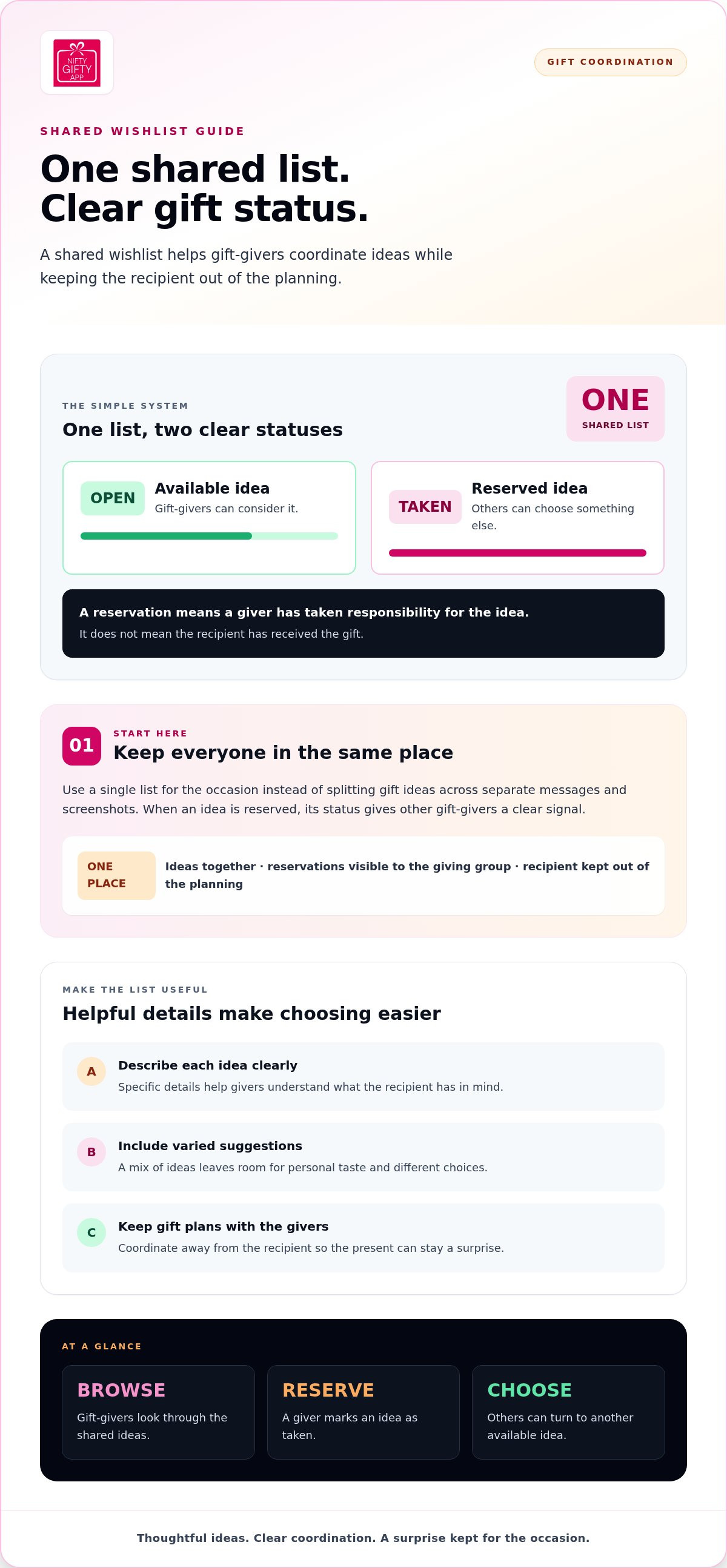
A shared wishlist gives family and friends one place to browse gift ideas. Reservation tracking adds the useful part: when a giver claims an item, its status changes so others can choose something else. For example, if Mia lists a sketchbook and her cousin claims it, her aunt can see it’s taken before purchasing.
Agree on one list for the occasion, rather than relying on separate messages and screenshots. Add a clear description for each idea, such as “green gardening gloves” or “a mystery novel by an Australian author”. Specific details help givers choose the intended item, while a few varied suggestions leave room for personal taste.
A claim should mean that one person has taken responsibility for a gift, not that the recipient has received it. This distinction matters when several relatives are still planning. If a giver changes their mind, they should release the claim promptly so someone else can choose the item. The group can agree to reserve items before purchasing, giving everyone time to coordinate.
Can Australian retailers share gift registry purchase status across stores? Don’t assume a purchase at one retailer will update a registry at another. A shared wishlist with manual reservations can bring ideas from different shops together, so a cousin can mark a book as claimed even if another relative plans to buy it elsewhere.
Receiving a list should feel like helpful guidance, not an instruction to buy a particular thing. Add a mix of useful items, favourite interests, and flexible ideas. For example, a new parent might list a particular children’s book, a meal they’d enjoy, and a practical item. Givers can coordinate around the list while choosing what suits their relationship and plans.
For someone without a smartphone, keep the same list available in a format they can use. The organiser can share a printed copy, read the current suggestions over the phone, or take reservations by call and update the master list. Tell the group how to reach the organiser, then make each reservation visible before another giver chooses that item.
A shared list works best when its status stays current. Before a birthday or family gathering, the organiser can remove gifts already received, refresh outdated ideas, and release reservations that are no longer active. That simple upkeep helps relatives work from the same information, even when they live in different parts of Australia or shop at different retailers.
Before sharing the list, agree with family or friends to shop from gift lists, so everyone understands that the list is the common place to check. A gift item can only be claimed by one gifter at a time, preventing two people from claiming the same present. That single-claim rule makes reservation tracking useful: once an item is claimed, others can focus on remaining choices rather than duplicating that selection. The group can keep using the list as a shared reference, with claims distinguishing unavailable ideas from those still open.
4. How gifters claim items
On a shared gift list, a claim marks an idea as reserved for one giver. The steps depend on the list, but typically the giver opens it, chooses an available item, and selects the option to claim or reserve it. That status tells others to choose something else.
Gift lists let people mark an item as purchased or reserved by updating its status. A reservation can happen before purchase, so the group can coordinate early. Update the status if plans change. For example, if Priya reserves a cookbook but later chooses another gift, she should release the original item.
A straightforward claiming routine helps relatives avoid double-ups:
Open the shared list using the organiser’s link or QR code.
Choose an item that still appears available.
Claim or reserve it before purchasing, if the list offers that option.
Update or remove the claim if the plan changes.
Keep the distinction between a claim and a completed purchase clear. A relative may reserve a board game while comparing options, but that doesn’t mean it has been bought. Agree that anyone who reserves an item will either follow through or release it promptly, so another giver can take over.
Privacy settings can also protect the surprise. Some gift lists show other givers that an item has been claimed while hiding the claimant’s name from the list owner until after the occasion. That way, the group can avoid duplicate presents while the recipient stays unaware of the plan.
Before sharing a list, explain how its status works. Tell relatives whether to reserve an item before purchasing, how to release a claim, and who can see the details. For example, an organiser might message the family: “Please reserve your choice first, and let me know if your plans change.” Clear instructions matter when relatives are coordinating across separate chats.
Some lists can be browsed without an account, and others require one to claim an item. Choose a list that lets guests claim through a browser link without downloading an app or signing up. That makes it easier for relatives to record their choice, while the organiser can keep the shared list up to date.
Claims work best when the group treats the list as its current record. Check an item’s status before purchasing, and update the reservation if plans change. These small steps help relatives across Australia coordinate without revealing the surprise to the recipient.
Claiming an item on a gift list takes about thirty seconds, so gifters can reserve their choice as soon as they decide. They can then check that the status is clear before purchasing and revise it if their plans change, keeping the shared list aligned with the group's choices.
5. Choosing a shared gift registry app in Australia
The right shared gift list depends on how your group chooses presents. A family buying from several retailers needs a different setup from a group choosing products from one store. Compare how each tool handles reservations, privacy, guest access, and gift ideas before using it for a birthday or family celebration.
A store-linked registry suits groups who want to choose presents from one retailer. It keeps selected items together, but may not cover ideas from other shops. If relatives prefer to choose across retailers, look for a list that lets the organiser add ideas from different sources.
A shared gift-list app can offer one place to collect ideas for an occasion. Check whether it supports real-time reservation tracking, so one giver can claim an item and others can see it’s taken. For example, an uncle could claim a portable speaker while a cousin chooses a different item from the same list.
Privacy matters just as much as the list itself. Check what the recipient can see and whether the organiser can view claims before the occasion. A setup that keeps the recipient out of the gift-giver list helps preserve the surprise, while showing claim status to givers helps them coordinate.
Access is another practical consideration for a family spread across Australia. Can relatives open the list from a shared link? Do they need an account to claim? Nifty Gifty App lets guests use a browser link or QR code without downloading the app or signing up. If a grandparent prefers phone calls, the organiser can record their choice and update the list.
Before settling on a tool, compare these details:
Retailer range: Can the organiser add ideas from one shop or several?
Claim status: Can givers reserve an item before purchasing it?
Surprise settings: Which details can the recipient and list owner see?
Guest access: Can relatives browse and claim without an account or app?
List upkeep: Can the organiser update ideas and release changed reservations?
Try the list with one upcoming occasion before sharing it with the wider family. Add a specific idea, ask a relative to claim it, then check whether its status is clear to other givers. This simple test shows whether the tool fits your group’s shopping habits and keeps gift plans easy to follow.
Nifty Gifty App
Nifty Gifty App gives organisers a mobile place to manage gift lists for any occasion. Add gift ideas, then share a secure link or QR code so guests can claim items without downloading the app or creating an account. Claims update in real time, helping relatives see what’s already spoken for and choose another idea.
It suits family organisers coordinating gifts across group chats, cities or households. Organisers use the iOS or Android app, while recipients receive the gifts and guests handle claims. For a shared occasion list that keeps gift plans together, visit Nifty Gifty App.
Make the next occasion easier to organise
A calmer gift plan starts before anyone chooses a present. Set a shared expectation for how your family will coordinate, then keep gift ideas and reservations in one place. That small change gives relatives a clear next step, whether they’re planning together or from different parts of Australia.
If you’re working out how to stop two people buying the same present, make coordination part of the occasion planning rather than an awkward conversation after gifts are opened. Choose a shared approach that suits your group, and tell everyone where to find the current list. The recipient can still enjoy a surprise while givers can see what’s already spoken for.
For your next occasion, use Nifty Gifty App to keep gift plans organised as your group makes its choices. Visit Nifty Gifty App and make room for the joyful part: choosing a thoughtful present for someone you love.
Frequently Asked Questions
Does the list owner find out who claimed what?
It depends on the list’s privacy settings. Some tools show that an item is claimed without revealing the giver’s name until after the occasion. That preserves the recipient’s surprise, but can make it harder for an organiser to follow up about a gift that hasn’t been purchased. Before sharing a list, decide whether your group needs to see names, claim status, or both.
Does this work for any kind of occasion?
Yes, shared gift lists can help coordinate presents for birthdays, Christmas, weddings, and baby showers. Nifty Gifty App supports lists for every occasion, so an organiser can create one for a family celebration or another gift-giving event. For example, relatives can keep a wedding list separate from a child’s birthday list, making each occasion’s ideas easier to manage.
How Do You Prevent Duplicate Gifts Before They Happen?
To work out how to stop two people buying the same present, agree on one place to record gift choices before anyone purchases. Ask each giver to note their intended item, then look for overlap in brand, model, or colour. For example, two relatives might both plan to buy the same coffee machine in different finishes. Comparing details early helps them choose distinct presents.
How can I stop getting duplicate gifts in the future?
Tell regular gift-givers what you already own and share a few current interests before the next occasion. Keep a note of repeated gifts, such as books by the same author or kitchen tools, so you can gently suggest different ideas next time. If you’d rather not receive more items, suggest a shared meal or outing instead. Make your preference clear, but keep the tone appreciative.



Comments