
Stop Forgetting Brilliant Gift Ideas and Choose Thoughtfully

A brilliant gift idea can come up mid-conversation, then vanish before the occasion arrives. You can stop forgetting brilliant gift ideas by capturing them as soon as someone mentions a wish, a problem or something they’re excited about. A quick note gives those passing comments somewhere to land.
Thoughtful gifting isn’t just about coming up with a clever present at the right moment. Remembering what someone said and noticing what suits their life now matter just as much. No frantic mental replay required.
This guide shows you how to save gift ideas in one place, turn a forgotten thought into a useful direction and choose between a physical present, a shared experience or a group gift. You’ll also learn how to match your choice to someone’s current needs, so your next present feels personal rather than last-minute.
Table of Contents
1. Why common last-minute gifts can feel impersonal
A candle, box of chocolates or generic mug can fill a gift bag quickly. But without a connection to the recipient, it may feel chosen for the calendar rather than for them. Often, the difference is a small detail: a favourite scent, a shared joke or a hobby they’ve mentioned. A gift that reflects one of those details can feel personal, even when it’s simple.
How much should you budget for gifts for family, friends and colleagues in Australia? There’s no single amount for every relationship or occasion. Choose a figure that fits your spending plan, then consider how close you are to the recipient and what the event means to them. A thoughtful note or shared activity can matter more than spending more.
For a hard-to-buy-for person’s birthday, start with what you know about their routines. A keen home cook might enjoy a class that teaches a new skill, while someone who treasures time together might prefer a planned outing. For a colleague, a useful notebook or a treat related to a shared interest can feel more considered than a default desk accessory. These are starting points, not rules based on age or relationship.
What are popular Australian gift ideas by age, relationship and occasion? There’s no option that suits everyone, so use the recipient’s interests and the event as your guide. For a child, consider a creative activity; for a parent, plan time together; for a friend’s birthday, choose something tied to a hobby. A workshop, shared meal or outing can suit people who value experiences over extra objects.
Creative classes make that choice tangible. A watercolour workshop offers a calm activity, while a splatter-painting session gives someone room to experiment. Check the class format and location against the recipient’s preferences before choosing. If the birthday is today, an emailed voucher may arrive within a minute when the provider offers instant delivery. Add a personal message explaining why you chose that class, rather than forwarding the email without context.
Experiences also work when a physical present feels uncertain. A ticket or class can create time together, while a small keepsake gives the recipient something to open. For example, pair a cooking workshop with a handwritten recipe card. The activity carries the main thought; the keepsake makes the moment feel like a gift. Keep a note of ideas people mention, so you can stop forgetting brilliant gift ideas before the next occasion.
2. Keeping a note of gift ideas people mention
A passing comment can hold a useful clue: “I’d love to learn pottery” or “My headphones keep cutting out.” Capture it straight away in a notebook or a dedicated phone note. Include the person’s name and exact words, so you remember what sparked the idea. A vague entry like “something for Dad” won’t help much later.
Keep the note easy to find. If you use your phone, save it somewhere you can reach quickly, rather than burying it among unrelated reminders. A small notebook works too, especially if you already carry one. The habit is simple: add the idea while the conversation is fresh, then record enough context to remember why it matters.
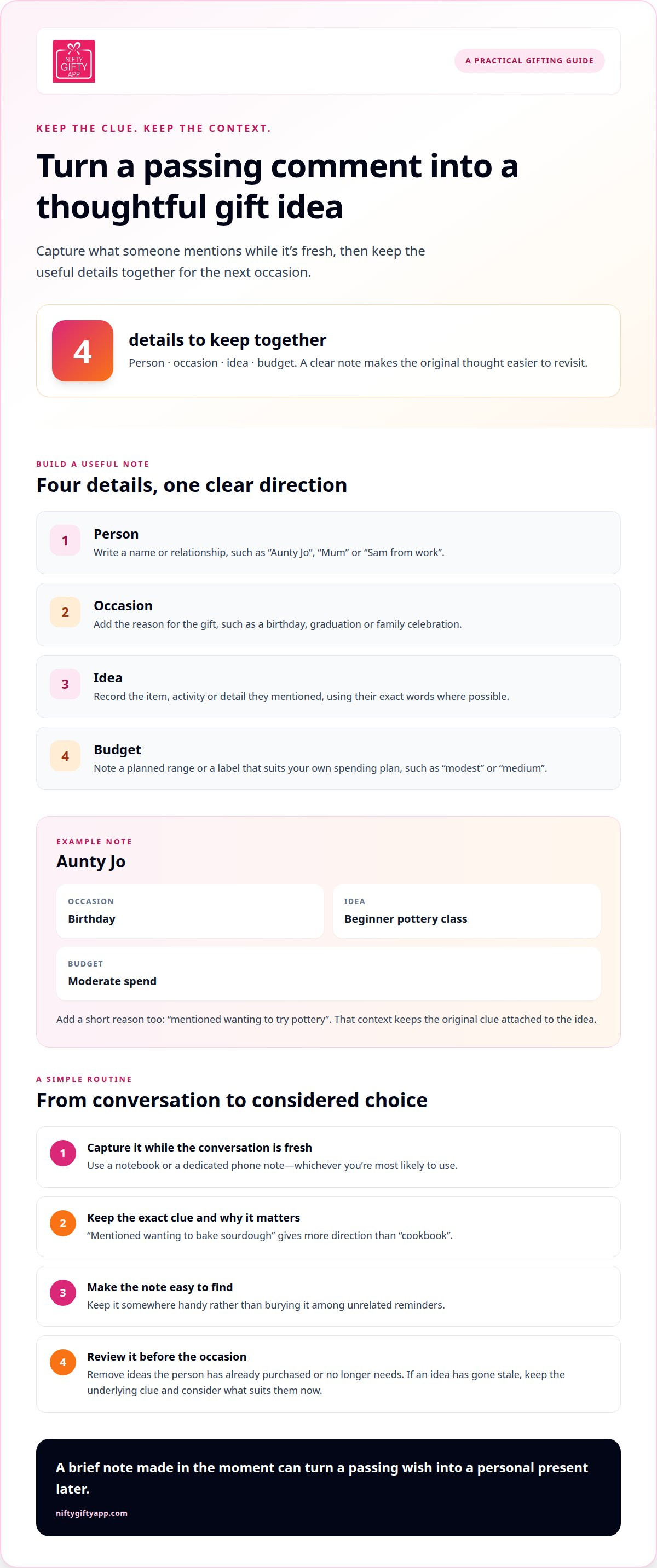
How can you organise gift ideas by person, occasion and budget? Give each person a heading, then record the occasion, idea and a budget range beside it. For example, under “Aunty Jo”, note “birthday, beginner pottery class, moderate spend” or “Christmas, gardening gloves, modest spend”. Use budget labels that suit your own plans, rather than adopting someone else’s figures.
Person: A name or relationship, such as “Mum” or “Sam from work”.
Occasion: Birthday, graduation or a family celebration.
Idea: The item, activity or detail they mentioned.
Budget: Your planned range or a label such as modest, medium or larger.
Add a short reason beside each idea. “Mentioned wanting to bake sourdough” is more useful than “cookbook”, because it preserves the original clue. If they name an author, shop or activity, record that detail too. Thoughtful gifting starts with listening, and the note keeps that context attached to the idea.
Review your list before an occasion, not just on the day. For a birthday, scan that person’s notes and remove options they’ve already bought or no longer need. If an idea has gone stale, keep the underlying clue. Someone who mentioned sore feet might appreciate comfort, even if the exact shoes they once discussed no longer suit them.
Keep the note private and practical. Avoid recording sensitive details you don’t need to choose a present. When a family member shares a wish in a group chat, copy the useful detail into your own list instead of relying on finding the message months later. This small step makes it easier to remember the idea and choose a personal present.
A dedicated note can help you remember wishes friends or family mention casually. It gives those passing remarks a place to stay until you’re ready to choose a present. When you add an idea, keep the detail that made it meaningful: perhaps it was an activity they hoped to try or a small problem they wanted to solve. That context can help you recognise the right option later, even if you don’t clearly remember the conversation.
A notebook is one way to capture ideas as they occur. It’s useful when your phone isn’t at hand or you prefer writing things down. Choose the method you’re most likely to use and stick with it. A brief note made in the moment can preserve a wish that might otherwise slip away, leaving you free to consider it more carefully when an occasion approaches.
3. Gift selection advice for forgetful people
Make the choice easier by testing each idea against the recipient’s everyday life. A coffee gadget may suit someone who makes coffee at home, but not someone who rarely uses their kitchen. Ask whether the gift fits their habits, available space and interests. If it’s likely to sit unopened in a cupboard, keep looking.
For a practical check, picture the recipient using the gift next week. A gardener might reach for quality gloves, while someone who enjoys reading could use a book light regularly. These examples work because they connect to an existing routine. A present doesn’t need a clever twist to feel personal.
Use a short shortlist instead of reopening every possibility. Keep each option specific, then compare them against the same criteria: usefulness, personal relevance and how easy they’ll be to enjoy. If a friend has mentioned wanting to bake, a baking class may feel more fitting than another kitchen ornament. If they already own the equipment, choose an activity instead of a duplicate item.
Use: Can you picture the person reaching for it?
Fit: Does it suit their current interests or routine?
Space: Will they have room to keep or use it?
Meaning: Does it connect to something they’ve shared?
A physical gift isn’t automatically more thoughtful than an experience. A pottery class can suit someone keen to try a new skill, while a small handmade keepsake gives them something to unwrap. For a friend who loves live music, tickets paired with a printed photo from a favourite gig can make the invitation feel more tangible.
For a shared present, agree on the idea before sorting out contributions. A family might choose a cooking class for a parent, then decide who wants to contribute. Keeping the gift itself clear helps the group focus on why it suits the recipient, rather than swapping unrelated suggestions. The organiser can record the final choice, so another relative doesn’t select the same thing.
If two options both fit, choose the one that asks less of the recipient. A book by a favourite author is easy to enjoy; a complicated gadget may need setup and ongoing effort. Trust the details the person has shared, but leave room for their circumstances to change. A present that suits their current routine is more likely to feel welcome.
Pairing an experience with a small keepsake can make the gift more satisfying to open. If an experience feels right, consider a modest item that gives the recipient something tangible when you give it. Choose a keepsake related to the experience, rather than adding an unrelated object just to make the present feel larger. This keeps the focus on the shared idea while making the gift feel more complete.
4. Gift-giving indecision and decision fatigue
Choosing presents for a whole family can turn one pleasant task into a string of small decisions. You might compare a cookbook, a café voucher and a cooking class for your sister, then repeat the process for every relative. Make the task smaller by separating idea gathering from choosing. Collect possibilities first, then review them in one sitting.
Set a clear purpose for each present before weighing options. For your brother’s birthday, it might be “something he can enjoy on his weekend rides”. This gives you a useful filter. A cycling accessory fits; a novelty desk toy probably doesn’t. A clear purpose also stops you reopening the same decision every time another idea appears.
Use a simple stopping rule. Choose an option that matches the recipient’s interests, suits the occasion and feels manageable to arrange. If a friend loves gardening, a useful plant pot may meet those tests without further browsing. You don’t need to prove it’s the perfect present. You need a thoughtful choice with a clear reason behind it.
Write the purpose: “For Dad, something for quiet afternoons.”
Keep options connected: Consider a puzzle book, a bird-watching guide or a planned walk.
Make the choice: Pick the option that feels easiest for him to enjoy.
For group gifts, indecision can grow when everyone suggests a different direction. A family chat might include a restaurant voucher, a new barbecue tool and concert tickets for the same recipient. Ask contributors to agree on the kind of gift first, such as an outing or a hobby-related item. Then one organiser can gather relevant suggestions instead of weighing unrelated ideas.
Keep track of decisions as well as ideas. Mark a present as selected, being organised or already purchased. That small status note helps busy parents and relatives across cities avoid revisiting settled choices. It also gives everyone a clear update without another round of messages asking whether the gift has been sorted.
If you’re stuck, return to a detail the recipient shared. A friend who mentioned missing live music might appreciate an evening out more than another item for their home. If the detail doesn’t lead to a clear choice, choose a flexible direction, such as time together, instead of starting a fresh list. A short decision process keeps gifting thoughtful without letting the search for certainty take over.
5. Matching a gift to someone’s current needs
A present can suit someone’s interests and still miss what they need today. Think about their current energy, routine and circumstances before choosing. A friend coming through a demanding month might appreciate a calm activity more than an energetic outing. Someone with a full schedule may value a practical gift they can use at home.
Let recent conversations guide you, not just an old memory of what they once enjoyed. Your brother might usually love busy weekends, but lately he’s been asking for quiet time. A watercolour workshop could offer a gentle way to slow down and try something new. If your friend wants to let off steam, a splatter-painting session may suit their mood better.
Use this quick check before deciding:
Notice their current pace: Are they craving rest, company or activity?
Look for a present-day clue: Have they mentioned a new routine or frustration?
Choose a fitting format: Would an object, an experience or time together help?
Keep it easy to enjoy: Does it fit their schedule and circumstances?
A practical present can solve a small, recurring problem. If someone regularly misplaces their keys, a Bluetooth key finder can make attached keys ring when they go missing. It can also help locate a lost phone. That choice connects directly to something they deal with, rather than adding another decorative item to their home.
At Christmas, it’s tempting to choose the same kind of present for everyone. Instead, adapt the idea to each person’s current life. A relative who has just moved might appreciate something useful for their new home. A cousin who has taken up painting could enjoy fresh materials or a class. The occasion stays the same; the reason behind each gift changes.
Distance also affects what feels useful. For family spread across cities, a shared online activity may be easier to enjoy together than an outing that requires everyone to travel. For relatives overseas, consider whether the present fits their routine and can be enjoyed without extra planning. A thoughtful choice accounts for the recipient’s circumstances, not just the giver’s good intentions.
Before settling on an idea, picture the recipient using it in their current routine. If your friend has recently started walking in the mornings, something that supports that habit may feel timely. If their energy is low, a quiet afternoon together could be kinder than a packed day out. Matching the gift to what’s happening now can make an old idea relevant again.
Nifty Gifty App
Nifty Gifty App helps you organise gift lists and keep group gifting on track once you’ve chosen a present. Use the mobile app on iOS or Android to manage occasions and gifts in one place. Guests can claim gifts through a secure link or QR code, without downloading an app or creating an account. Claims update in real time, helping family organisers and contributors see what’s already covered.
For a group present, the app tracks contributions with a live running total, but doesn’t collect or process payments. It’s a practical next step when a thoughtful idea needs coordinating across family or friends, including relatives in different cities.
To organise your next occasion, try Nifty Gifty App.
Make your next thoughtful gift easier to find
A practical way to stop forgetting brilliant gift ideas is to capture the thought while it’s fresh, then note why you saved it. A name and a few words may be enough: “Jess, mentioned wanting more time outdoors.” Later, that clue can guide a present that fits who Jess is now, not just what you remember from years ago.
Make the habit small enough to keep. Add the idea after a conversation, revisit it before an occasion and let go of options that no longer fit. You don’t need to solve every future birthday today. Just give the next good thought somewhere to land.
If coordinating gift ideas and group giving is part of your role, explore Nifty Gifty App as your next step. Start with one upcoming occasion and build from there. Thoughtful gifting can feel lighter when the ideas are ready when you need them.
Frequently Asked Questions
What are effective ways to capture gift ideas as soon as they come to mind?
Use the quickest tool within reach, such as a phone note, voice memo or pocket notebook. Record the person’s name, the idea and what prompted it. For example, “Riley, mentioned wanting a better lunch flask for work” gives you more to go on than “gift for Riley”. Add a calendar reminder to review your notes before an occasion, so the idea doesn’t stay buried.
Which gift-planning apps and reminder tools are available in Australia?
Australians can use everyday tools such as phone notes and calendar reminders, or a dedicated gift-planning app. Nifty Gifty App lets organisers save and track gift ideas and monitor gift progress. It suits people coordinating several occasions or keeping plans together across the year. A calendar can still help with timing, while the app keeps gift details connected to the relevant occasion.
How can I find thoughtful gift ideas based on someone’s interests and past conversations?
Look for repeated clues in what they choose to do, talk about or learn. If a friend often shares photos of native plants, for instance, a guided garden visit may connect with that interest. Notice whether they’re curious about trying something new or already committed to a hobby. A gift that builds on an active interest can feel more personal than one based on a passing mention.



Comments